These are blood disorders in which some blood cells (called eosinophils ) begin to grow out of control.
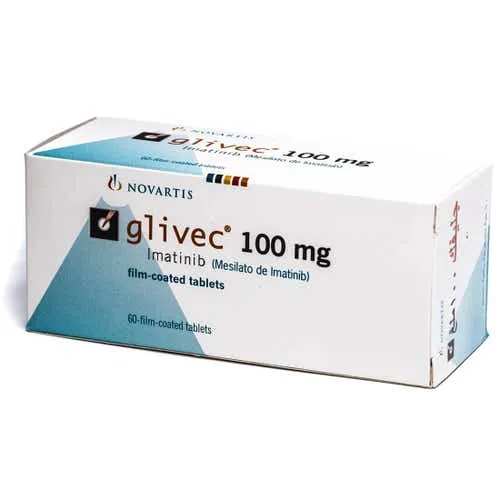
Glivec prevents the growth of these cells in a specific subset of these diseases.
Gastrointestinal stromal tumors (GIST):
Which is a form of cancer in the stomach and intestinal system.
it is caused by uncontrolled cell growth in the supporting tissue in these organs.
Dermatofibrosarcoma protuberance (DFSP):
DFSP is a form of cancer in the subcutaneous tissue, where certain cells begin to grow out of control.
Glivec prevents the growth of these cells.
In the rest of this package insert, the abbreviations will be used when the diseases are mentioned.
Ask your doctor if you have any questions about how Glivec works or why this medicine has been prescribed for you.
Glivec will only be prescribed to you by a doctor who has experience in using medicines to treat blood cancer or cancerous tumors called solid tumours.
Follow all instructions from your doctor carefully,
Even if they differ from the general information in this leaflet.
Do not use Glivec:
If you are allergic to imatinib or any of the other ingredients of this medicine (listed in section 6).
If this applies to you, tell your doctor before using Glivec.
Ask your doctor for advice if you think you may be allergic but are not sure.
How To Use:
The doctor has prescribed Glivec because you suffer from a serious illness.
Glivec can help fight this disease.
Always use this medicine exactly as your doctor or pharmacist has told you.
It is important that you do this for as long as the doctor or pharmacist tells you.
Talk to your doctor or pharmacist if you are unsure.
Do not stop treatment with Glivec unless your doctor tells you to.
If it is not possible to take the medicine as the doctor has told you, or you feel that you no longer need it, contact the doctor immediately.
When and how to use Glivec:
Glivec should be taken with a meal. This will help protect against stomach problems when taking Glivec.
The tablets are swallowed whole with a large glass of water.
If you are unable to swallow the tablets they can be dissolved in a glass of water or apple juice:
Use approx. 50 ml for each 100 mg tablet or 200 ml for each 400 mg tablet.
Stir with a spoon until the tablets are completely dissolved.
When everything is dissolved, drink the entire contents of the glass immediately.
There may be traces of dissolved tablets left in the glass.
If you take too much Glivec:
Contact a doctor immediately if you have accidentally taken too many tablets.
You may need medical follow-up. Take the package with the medicine with you.
If you have forgotten to take Glivec:
If you forget to take a dose, take it as soon as you remember. However, if it is almost time to take the next dose, you should skip the missed dose.









Reviews
Clear filtersThere are no reviews yet.